
_edited.png)

.png)
.png)
Why Teaching Kindness to Kids Matters More Than Ever

Updated: Jul 6

In a world that often feels rushed and overwhelming, kindness remains one of the most important lessons we can teach children. While academics matter, helping children grow into compassionate, confident people builds a foundation that lasts far beyond the classroom.
Kindness is not simply about saying “please” and “thank you.” It’s about empathy, courage, inclusion, and learning how our actions affect others. When children practice kindness early, they begin developing emotional awareness, stronger friendships, and confidence in themselves.
Research continues to show that social-emotional learning plays an important role in children’s academic success and emotional well-being. According to the Collaborative for Academic, Social, and Emotional Learning (CASEL), social-emotional learning helps children develop self-awareness, relationship skills, empathy, and responsible decision-making. Students who participate in SEL-centered learning environments often demonstrate stronger academic performance and improved social behaviors.
Sometimes the smallest moments create the biggest impact.
A child inviting someone to play.
Helping a classmate clean up. Offering encouragement when a friend feels nervous.
These moments may seem simple, but they plant seeds that continue growing over time.
Why Teaching Kindness to Kids Matters
Many people think kindness is always easy—but for children, kindness can require courage.
It takes courage to:
Include someone new
Speak kindly during conflict
Try again after making a mistake
Stand up for a friend
Offer help when someone is struggling
When children learn that kindness and courage work together, they begin building emotional strength as well as empathy.
That’s why social-emotional learning experiences are so important at home and in the classroom. Through conversations, stories, role-play, and everyday examples, children learn how to navigate emotions and relationships in meaningful ways.
Simple Ways of Teaching Kindness to Kids
Teaching kindness does not have to be complicated. Small daily habits can make a powerful difference.
Here are a few simple ideas:
Create a “kindness challenge” for the week
Write encouraging notes to friends or family
Read picture books that model empathy and inclusion
Practice gratitude during meals or morning meetings
Celebrate acts of kindness—not just achievements
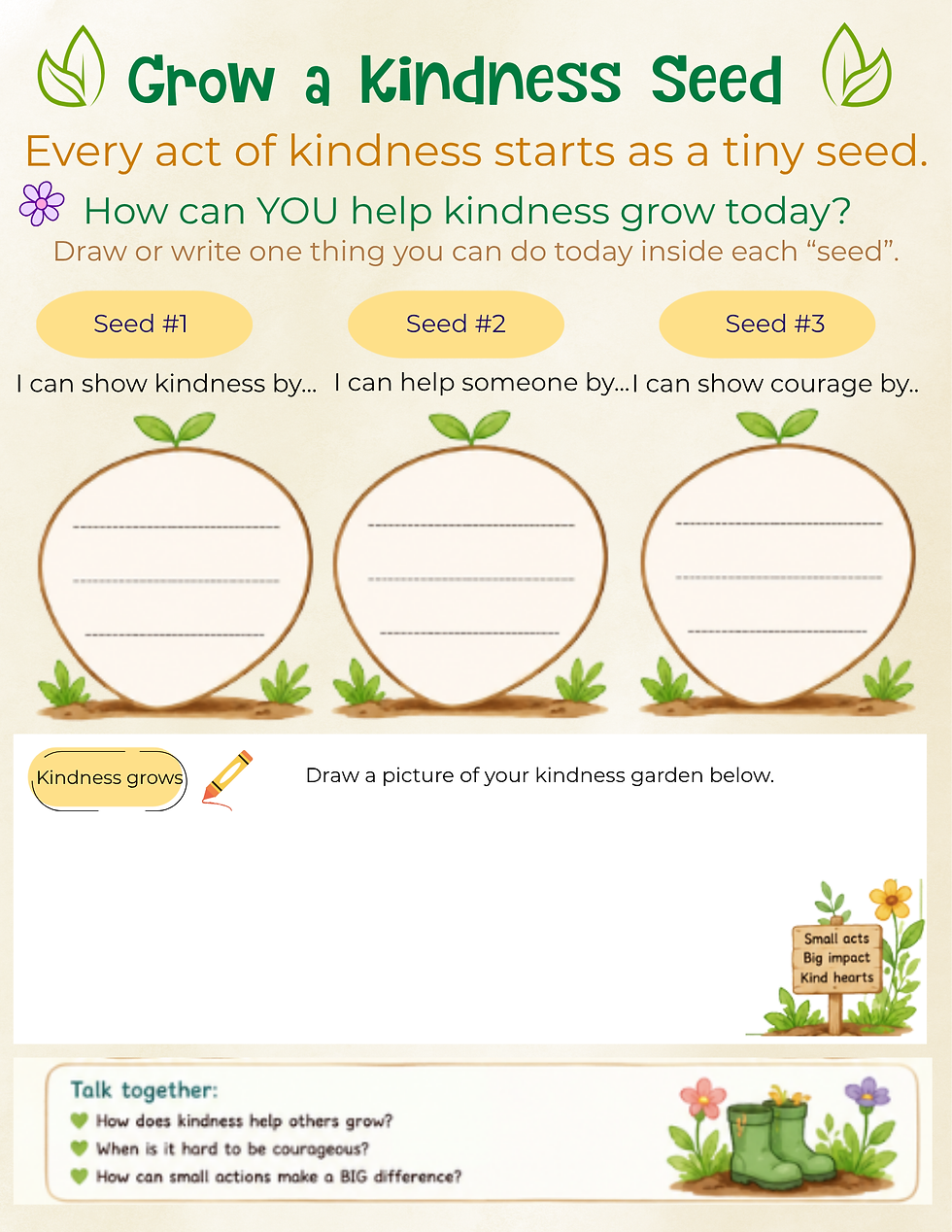
Hands-on activities can help too. Gardening activities, kindness journals, and printable reflection pages allow children to connect emotions with action in memorable ways.
Picture Books for Teaching Kindness to Kids
Books are one of the most powerful tools for teaching emotional growth. Reading stories together also helps children build empathy and emotional understanding. Research published through developmental psychology studies has shown that children who engage with stories and discuss emotions and perspectives can strengthen their ability to understand the feelings of others. Through stories, children can safely explore feelings, challenges, friendship, courage, and compassion.
Picture books create opportunities for meaningful conversations:
“How do you think that character felt?”
“What would you have done?”
“How could we show kindness today?”
These discussions help children build emotional language while strengthening connections with the adults who read alongside them.
Final Thoughts
Kindness may begin as a small seed, but with encouragement, patience, and practice, it grows into something lasting.
When we teach children kindness and courage together, we are helping raise thoughtful leaders, compassionate friends, and confident learners who understand the power of caring for others.
Kindness may begin as a small seed, but with encouragement, patience, and practice, it grows into something lasting. 🌱 Download your free kindness chart.
Thank you for stopping by!
I hope these ideas inspire meaningful conversations, joyful learning, and moments of kindness with the children in your life.
With kindness,
Carolyn Watkins Award-Winning Children's Author • Former Elementary Teacher
Sources
Collaborative for Academic, Social, and Emotional Learning (CASEL)
Harvard Graduate School of Education
American Academy of Pediatrics


Comments