


How to Use Social Emotional Learning Role Play Cards in Morning Meetings and at Home
- Carolyn Watkins
- Mar 2
- 3 min read


Big feelings don’t disappear just because we tell kids to “calm down.”
They need practice.
Whether it’s excitement that turns into yelling, frustration during group work, or feeling left out at recess — children learn emotional regulation the same way they learn reading and math: through guided repetition.
That’s where SEL role play comes in.
Role play gives children a safe space to try, practice, reflect, and try again.
And one of the easiest times to use it? Morning Meeting.
Emotional regulation role-play gives children a safe and structured way to practice handling big feelings before they experience them in real life.
Help Kids Practice Big Feelings with Emotional Regulation Role-Play Activities That Build Self-Control and Confidence
Role play helps children:
• Identify big feelings • Practice replacement language • Build empathy • Strengthen problem-solving skills • Reflect on how their actions affect others
Instead of reacting in the moment, children rehearse skills ahead of time — so when real situations happen, they’re prepared.
That’s powerful.
These emotional regulation role-play scenarios allow students to think through their reactions and build self-control in a supportive environment.
How to Use Emotional Regulation Role-Play Cards in Morning Meetings to Support Social Emotional Learning
Morning Meeting is the perfect time to build emotional strength.
It’s structured. It’s predictable. And it sets the tone for the entire day.
Here’s a simple routine:
Step 1: Read the Scenario
Example:“You’re excited and start yelling in the classroom.”
Ask:What’s the big feeling here?
(Excitement!)
Step 2: Discuss Instead Of vs. Try This
Instead of: “Be quiet!”Try this: “Can you use a softer voice?”
Discuss:Why does the second response feel better?
Step 3: Act It Out
Choose two students to role-play.Then let the class reflect:
How did that feel?What changed?
Step 4: Connect to Real Life
Ask:When might this happen today?
This takes 5–7 minutes — and builds emotional awareness all day long.
Using Role Play Cards at Home
You don’t need a classroom to practice emotional strength.
Parents can use role play:
• After school as a reset • During sibling conflict • Before a big event • At bedtime as reflection
Instead of lecturing, try practicing.
Kids respond better to participation than correction.
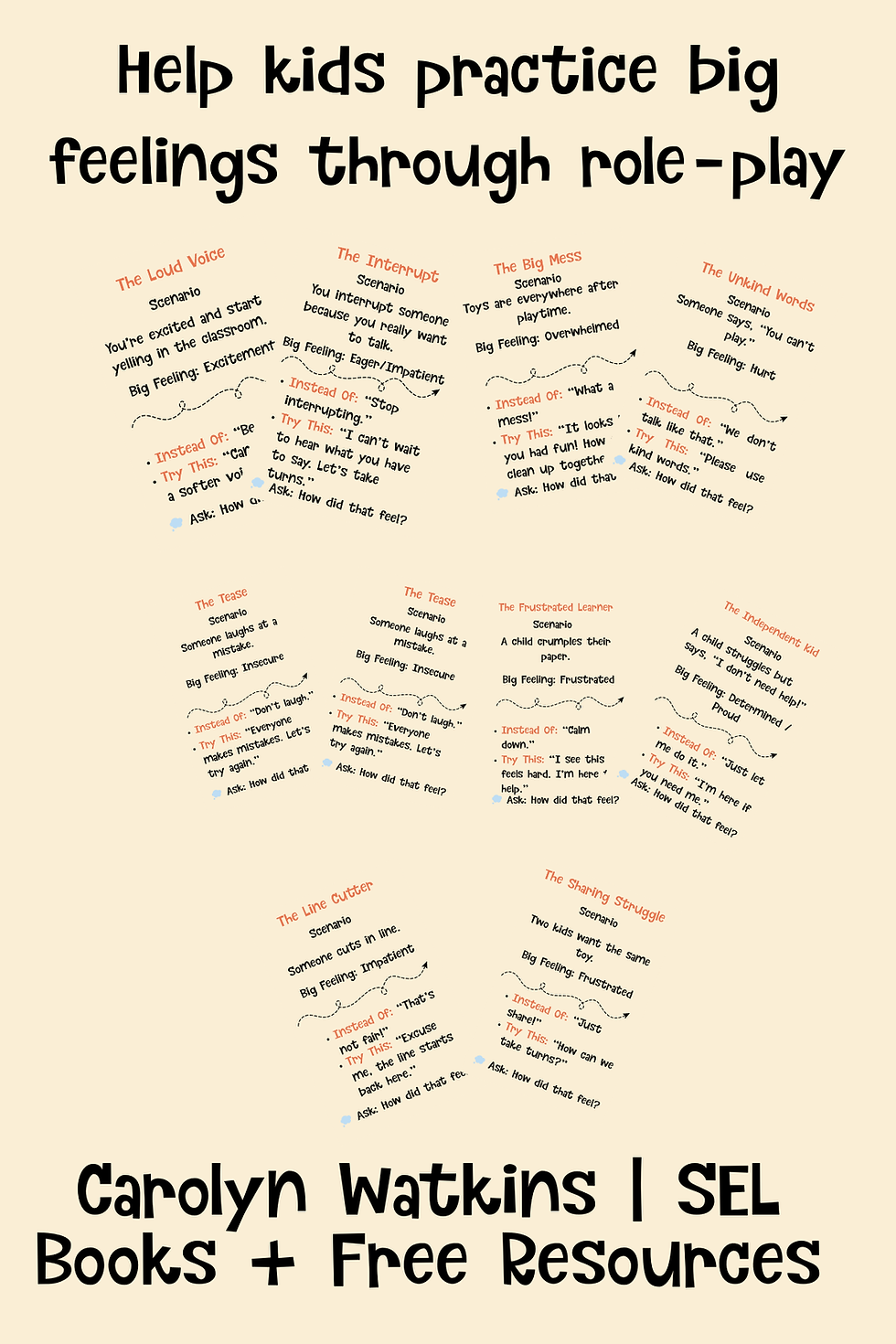
Sample Scenario: The Loud Voice
Scenario:You’re excited and start yelling in the classroom.
Big Feeling:Excitement
Instead of:“Be quiet!”
Try:“Can you use a softer voice?”
Reflection Question:How did that feel?
This small shift models respectful communication instead of control.
That’s emotional intelligence in action.
When used consistently, emotional regulation role-play becomes a powerful tool for strengthening social emotional learning at home and in the classroom.
Free SEL Role Play Cards
If you’re looking for simple, practical Social Emotional Learning tools, I’ve created printable SEL Role Play Cards you can use in morning meetings or at home.
They’re designed to help kids:• Practice big feelings• Learn replacement language• Build empathy• Reflect and grow
You can download the SEL Role Play Cards here.
Because emotionally strong kids aren’t born —they’re guided. 💛
Raising confident, kind kids doesn’t happen in one big moment — it’s built in small, everyday conversations. The stories we read, the words we choose, and the space we create for feelings all matter. Keep showing up. It makes a difference.
Social Emotional Learning Resources for Home & Classroom
Carolyn Watkins
Author | Social Emotional Learning Resource Creator Trailblazer Books & Free Printables for Home and Classroom
If you're looking for simple, meaningful ways to build confidence, kindness, and emotional strength in children, you can explore more Trailblazer resources and free printables throughout the site.


Comments